
Why cancer survivors resist hope — and how to hold it anyway.
In 2019, I was driving to my sister's house for Thanksgiving when I couldn't shake a quiet, unsettling thought: this might be my last one. It had only been two days since my cancer diagnosis. I was still holding onto hope — or at least I thought I was — but somewhere in those two days, my steely, unwavering certainty had softened into something far more vague. Something closer to a wish than a conviction.
Hope had started to feel uncomfortable. In the emotional upheaval of a new diagnosis, I couldn't quite understand why my hope was already beginning to waver. It was disorienting — and, I would later learn, entirely normal.
Introduction
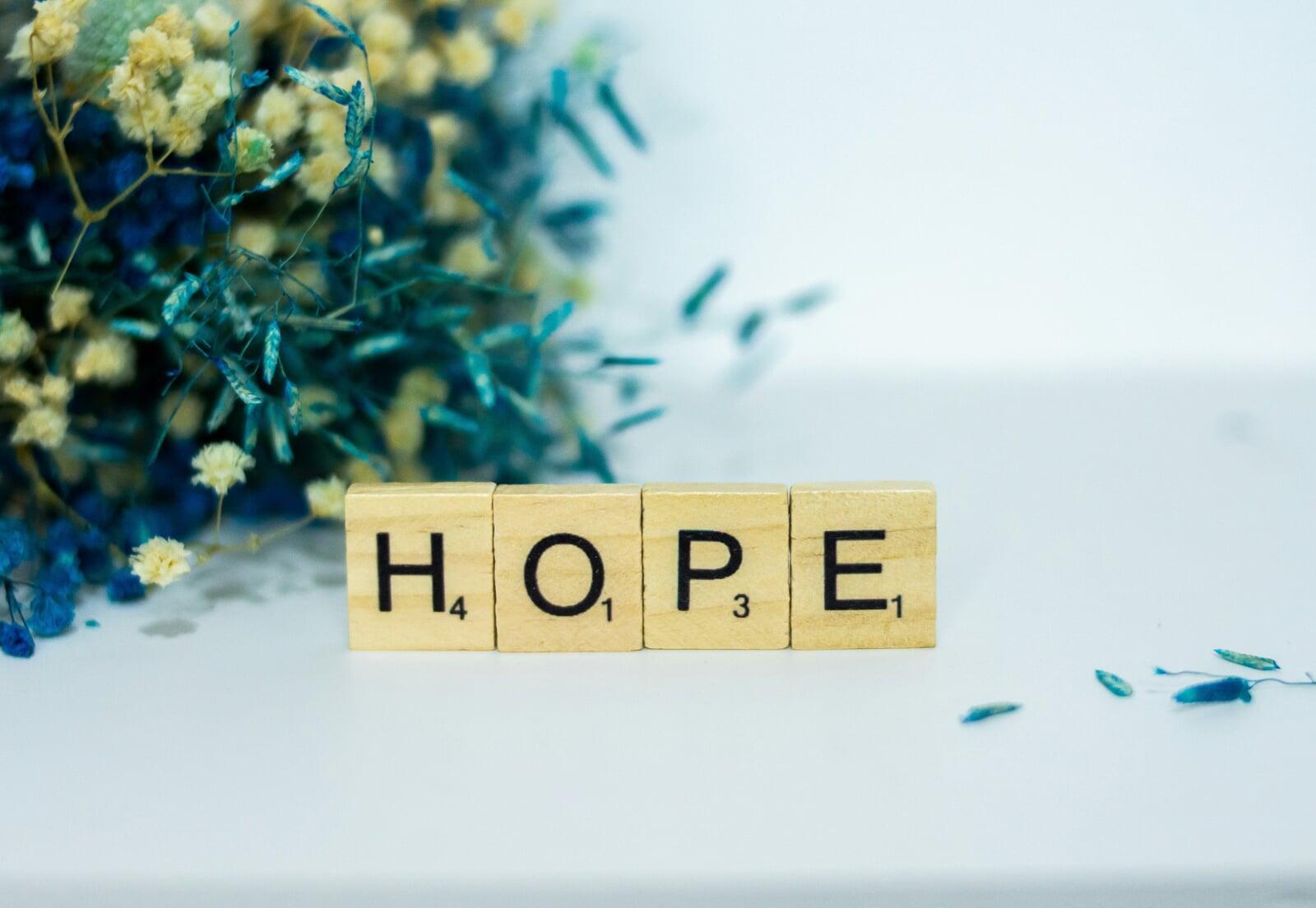
Hope is often described as one of the most powerful tools a cancer patient or survivor can carry. It is woven into the language of treatment, the encouragement of care teams, and the well-meaning words of everyone who loves you. And yet, for many people who have lived through the cancer experience, hope is not always comforting. It can feel less like a lifeline and more like a dare — something fragile, something dangerous, something reckless. At times, hope can feel like the riskiest emotion of all.
Understanding why hope feels reckless, what that internal struggle actually looks like, and — most importantly — how to move through it with honesty and courage can transform fear into a grounded, sustainable way to face the unknowns of cancer.
Why Does Hope Feel Reckless

Cancer has a way of rewriting your relationship with the future. A diagnosis doesn't just bring fear — it brings a confrontation with uncertainty that most people are never prepared for. And after you've been through that, hope can begin to feel like exposure. To hope is to want something. And wanting something means you can lose it again.
There are several underlying drivers that make hope feel this threatening:
Fear of emotional whiplash. Hoping sets up the possibility of disappointment. The higher the hope, the steeper the emotional fall can feel.
Conditioning from past experiences. If moments of optimism were followed by bad news, the mind learns to associate hope with pain. It becomes protective.
Loss of certainty. Cancer often replaces linear life narratives with ambiguity. Hope, in that ambiguity, can feel untethered — more like a gamble than a grounded belief.
The impulse toward self-protection. After receiving life-altering news, the mind often adopts a "brace for impact" mentality. Limiting hope can feel like managing expectations, like keeping your guard up. Hoping, by contrast, can feel like dropping it.
Wanting to protect the people they love. Some survivors worry that if they hope and then die, their loved ones will be more shattered by the loss. Staying emotionally guarded can feel like a final, quiet act of care.
Medical realities that reinforce caution. Statistics, unknowns, and the possibility of recurrence can make unbridled optimism feel naive — or even dangerous.
The weight of others' expectations. Survivors are often urged to "stay positive" or "keep fighting," as though hope is a moral obligation rather than an emotional state. When hope is demanded rather than chosen, it can feel performative and exhausting — and retreating from it becomes a form of quiet resistance.
The need to understand this feeling is precisely because it is so often invisible. Awareness of the nuanced nature of hope creates the space needed to actually work through it.
Understanding why hope feels reckless is not a detour from healing. It is the beginning of it.
What Does the Fear of Hope Look Like in Daily Life
This emotional experience rarely announces itself as a clear, named thought. Instead, it tends to surface in subtler patterns that are easy to dismiss or misread:
- Planning ahead feels presumptuous. Avoiding commitments, trips, or future-oriented goals — just in case.
- Downplaying good results. Struggling to fully accept positive test results or treatment milestones, always waiting for the other shoe to drop.
- Emotional numbing. Keeping expectations low to avoid feeling too much — good or bad.
- Emotional rationing. Allowing yourself only a small, carefully measured portion of good feeling, never a full breath of it.
- Holding people at a slight distance. Not wanting others to invest too much in a version of you that might not be there.
- Deflecting optimism from others. Feeling irritated or disconnected when friends or family try to encourage positivity.
- Living in a narrowed time horizon. Focusing only on the immediate present as a way to avoid uncertainty. The future simply feels too uncomfortable to inhabit.
These behaviors are not failures. They are adaptive responses — attempts to create stability in an inherently unstable situation. Recognizing them is the first step toward gently loosening their grip.
Effective Ways to Cope When Hope Feels Reckless
The goal isn't to force yourself into unwavering positivity. The goal is to redefine and regulate hope — to make it sustainable rather than destabilizing.
1. Shift from outcome-based hope to process-based hope
Instead of anchoring hope to a specific result ("I will be cancer-free"), anchor it to something within your influence — "I will show up for my treatment today," or "I will find one moment of meaning." This reframing lowers the all-or-nothing stakes considerably.
2. Say it or write it out
Avoidance keeps fear in control. Putting your feelings into words — in a journal, with a trusted friend, in a support group, or with a counselor — you begin to take back your power. This kind of validation can also reduce negative thoughts and lower emotional intensity.
3. Practice "measured hope"
Hope doesn't have to be absolute. It can coexist comfortably with realism. Try statements like: "This is hard, and there's still a possibility of good outcomes." Or: "I don't know what will happen, but I can handle what comes next." This dual awareness builds psychological flexibility over time.
4. Build tolerance for uncertainty
Uncertainty is the underlying stressor — not hope itself. Practices that help include grounding exercises that bring your attention to present sensory experience, structured daily routines that create predictability, and limiting overexposure to speculative or worst-case thinking. The more tolerable uncertainty becomes, the less threatening hope feels.
5. Connect hope with your values
Hope tied to predictions ("I'll make things like they were before") is fragile. Hope tied to values — "I will live with connection," "I will find courage," "I will act with purpose" — is far more durable. Values remain actionable regardless of medical outcomes.
6. Allow your full emotional range without trying to fix it
It's counterproductive to "correct" feelings of fear or skepticism about hope. Instead, try to acknowledge ("Part of me is afraid to hope"), normalize (this is a logical response to what I've been through), and integrate (make space for both fear and possibility at the same time).
7. Use micro-hopes
Large-scale hope can feel overwhelming. Break it down into something manageable: hoping for one good conversation today, hoping for a bearable appointment, hoping for one quiet moment of peace. These small, achievable forms of hope gradually rebuild trust in the act of hoping itself.
8. Look for the grief underneath
The fear of hope is almost always grief in disguise — grief for what's been lost, what's uncertain, what might never come. Letting that grief surface, rather than keeping it submerged, can take significant pressure off the need to suppress hope as a protective measure.
9. Seek connection and relational reinforcement
Hope often stabilizes in the presence of other people. Whether through a support group, therapy, or trusted individuals in your life, sharing these feelings reduces isolation and helps recalibrate perspective. You don't have to carry this alone.
10. Redefine what hope actually means
Many survivors eventually describe hope not as "everything will be perfect," but as "I can still create meaning, connection, and beauty no matter what comes." This deeper, more flexible version of hope is far more resistant to feeling reckless — because it doesn't depend on any particular outcome.
Conclusion
When hope feels reckless, it's not because hope itself is flawed — it's because the stakes have become deeply personal. The instinct to guard against disappointment is entirely understandable. But shutting out hope entirely can quietly limit your engagement with the life that is still unfolding around you.
Cancer asks so much of the people who face it. It asks for endurance, for patience, for compassion in the middle of genuine darkness. You don't need to be a warrior with an unbreakable spirit. You just need to be a human being who keeps showing up. Even if your hope is quiet and cautious — even if it is barely a whisper — it is still hope.
The path forward isn't about choosing blind optimism or hardened realism. It's about building a form of hope that is flexible, grounded, and resilient. And that kind of hope starts to look a lot like courage.
Final Thoughts
My own relationship with hope has taken quite a journey — beginning with blind certainty, unraveling into doubt, and then settling into something that felt, for a long time, almost reckless to hold. Over time, I found a version of hope that worked for me. One that was honest, life tested, and mine.
My oncologist recently told me I'm cured of cancer. And if I'm being honest, that kind of hope still feels a little reckless. Maybe it always will. Maybe that's exactly how you know it's real.