
Defining Progress in Cancer Recovery

12/11/25 10:48 PM - By Keith Glein

Judging your own cancer recovery progress - “Are we there yet?”

As cancer survivors, we all know that recovery is a deeply personal journey. Since every path is as unique as the individual walking it, how do we go about defining our own progress in a way that truly fits us?
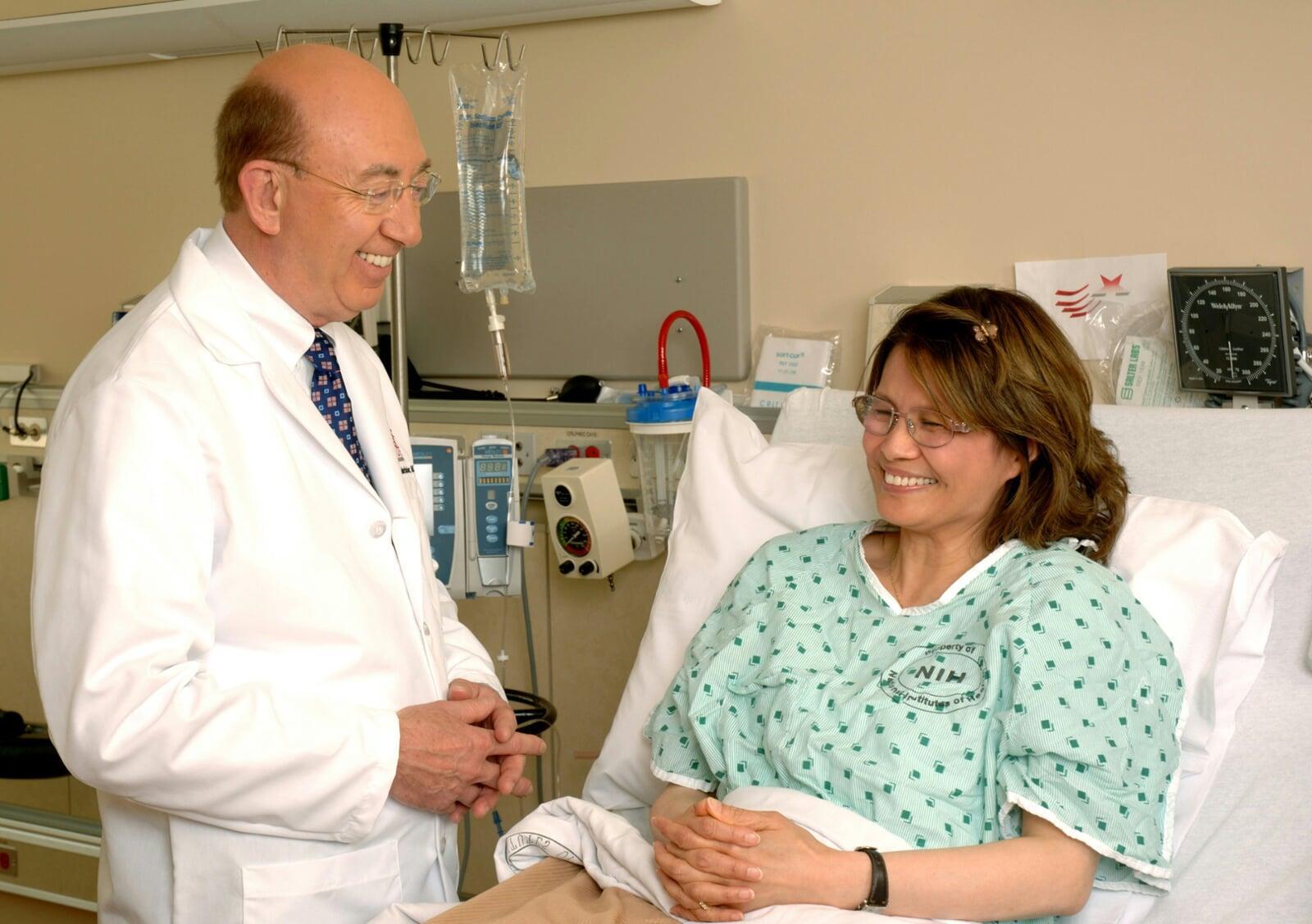
To add some important context, let’s go back to the beginning of your journey.  You’re diagnosed with cancer and you start your treatment.  You’re living in a highly structured environment, and your goals are quite simple.  I think most of us were living day-to-day or week-to-week during those times; maybe even hour-to-hour or minute-to-minute when things got really rough.  We were probably counting down the days until the end of our treatment … and then we were done.  Judging progress up to that point had mostly been pre-programmed for us by others.

The Standard Model

Generally speaking, I think most survivors just want to get their ‘old life’ back after treatment ends.  Ah, the holy grail of recovery!  Or is it the first step in setting ourselves up for failure?

Logically, recovery should go something like this:  Rebuild our physical abilities.  Regain our mental capabilities.  Achieve our practical goals for daily living.  These involve assessments, monitoring, and milestones.  It’s all logical, one step at a time and then you’re back to where you started before you were diagnosed with cancer.  I guess that may happen to some people but that’s not what happened to me.

Wandering Into the Wilderness

After treatment, I started off by monitoring my symptoms, tracking my energy, logging my exercise, and following my sleep patterns.  But over the course of 18 months I saw that I wasn’t recovering as fast as I wanted, in fact it was going very slowly.  Thoughts started creeping into my mind.  I began thinking in terms of ‘if’ I was going to recover, instead of ‘when’ I was going to recover.  This was quite unsettling at the time and I became really frustrated.

Did I set myself up for failure?
In a word, yes.  I had set myself up for failure.  After 18 months, it became clear to me that I was not getting parts of my old life back.  But getting frustrated was mostly my own fault because I had set my own expectations.  I was comparing my recovery to my ‘old life’.  Of course, I know now that that was a mistake.  As it turns out, it is a very common mistake.

So, let’s dive a little deeper into this.  At the beginning, it’s easy to set simple goals for yourself and that’s a really good thing to do.  I think where people begin to go wrong is when they do what I did and expect to get ‘all’ of their old life back.  You can hope and you can dream but don’t ‘expect’ to get everything back.  Because if you do, then you’ll be using your old life as a yardstick for your recovery.

Now, it’s not completely unreasonable to compare certain dimensions of your recovery to the past.  For instance, if you’re a runner comparing your 5K race times before and after treatment makes complete sense. 


But other dimensions could be much more problematic. For example, after the disruptions caused by your cancer and treatment, searching for your purpose and meaning in life may be very different after cancer. 

So, some dimensions of your recovery may align quite well with your past life, other aspects may be in total contrast, and some may still be very ambiguous to you.

This is why I think making judgments about your progress can be so difficult.  There are subtleties.  You need to carefully look at all the different dimensions of your cancer recovery; especially look at the aspects of your recovery where you’re in ‘limbo land’.  By that I mean, where you have one foot in your old world and one foot somewhere in a place you don’t quite understand yet.

Uncharted Territory

This was the epiphany in my own recovery.  To embrace the unknown. To understand that I didn’t have to know everything about where I was going ahead of time.

In hindsight, it may have saved me a lot of frustration if I had envisioned that some of the aspects of my recovery were going to be new adventures into ‘uncharted territory’ rather than just trying to get back to my ‘old life’.  I think deep down we all see that life is one big adventure but somehow having planned and built our lives only to have them disrupted by the chaos of cancer it can be easy to lose sight of that simple truth.  We may want the safety and security that the past represents but at the same time our future may be pulling us forward to our true destiny.


Keith Glein